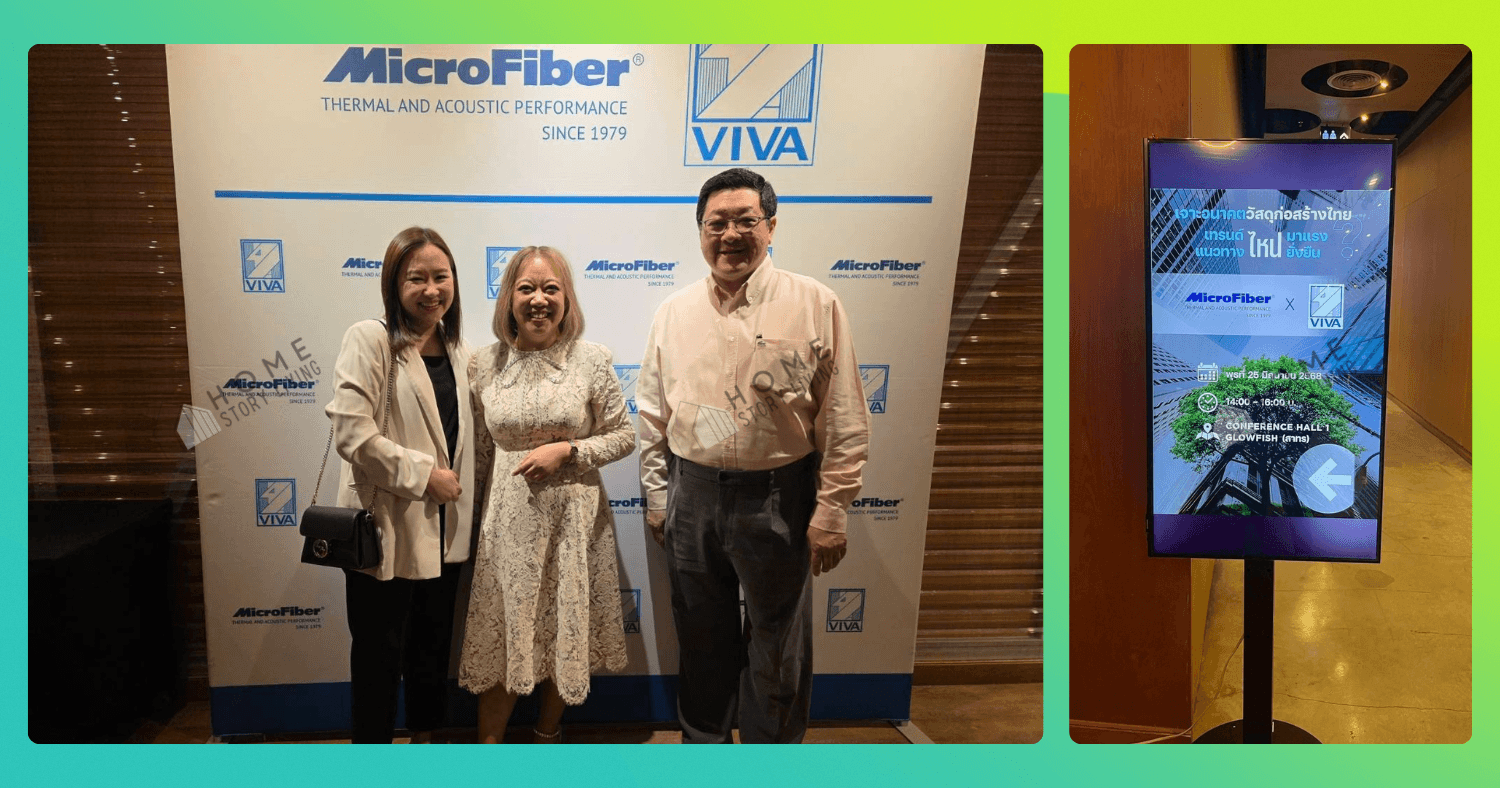
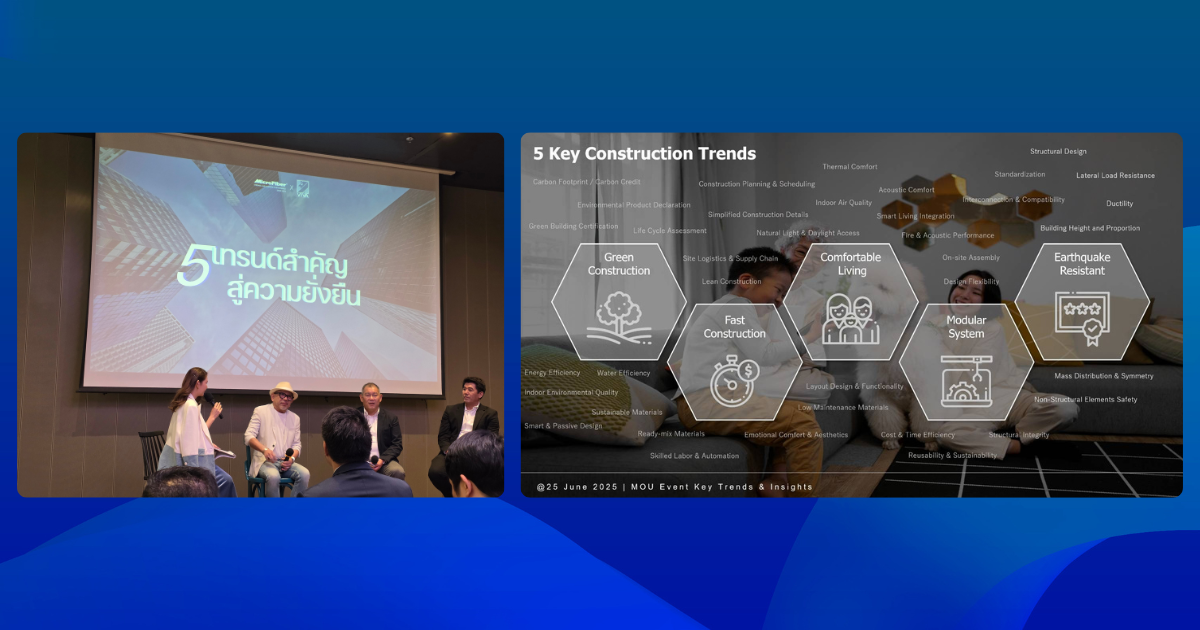
On June 25, 2025, Home Story Living was honored to be invited by two leading construction material companies in Thailand, Microfiber and Viva Board, to attend a seminar and memorandum of understanding (MOU) signing ceremony at Glowfish Sathorn, Bangkok, under the topic "Exploring the Future of Thai Construction Materials: Which Trends are Emerging, and Which Approaches are Sustainable?"
As a developer and manufacturer of prefabricated homes, knockdown homes, and modular homes in Thailand, this marks another significant milestone, reflecting that Home Story Living is not just a home seller, but a manufacturer recognized by national construction material brands.
This article will introduce you to Microfiber and Viva Board, detailing who they are, what their outstanding properties are, and how this collaboration will benefit Home Story Living's prefabricated homes in the future.
Who is Microfiber? The First Fiberglass Insulation Manufacturer in ASEAN
Microfiber Industry is the first manufacturer of fiberglass insulation in the ASEAN region. It has been in business since 1979, for over 46 years. Its products are certified to TIS 486 and TIS 487 standards, as well as international standards.
Key Features of Microfiber Fiberglass Insulation
Microfiber fiberglass insulation is not just an ordinary heat-resistant material, but a comprehensive environmental protection system designed specifically for the hot and humid climate of Thailand.
Up to 6 times more heat resistant compared to conventional wall materials, with up to 95% heat reflection (foil version). This significantly reduces the temperature inside the house, reducing the load on air conditioners and resulting in a 30 – 50% reduction in electricity bills compared to houses without insulation.
Absorbs noise pollution, helping to keep the interior of the house quiet, suitable for houses located near roads, resort homes, or homes that require privacy.
Moisture-proof and non-flammable. Fiberglass material does not absorb water, is not a breeding ground for mold, and has non-flammable properties, passing fire safety standards.
Long service life. Does not shrink or deteriorate over time. Install once and use for the life of the house, unlike some types of insulation that collapse after only a few years of use.
Safe for health. Contains no carcinogens, is not harmful to residents, and has passed health tests and standards.
Who is Viva Board? Thailand's Leading High-Quality Cement Board Manufacturer
Viva Board is a cement board brand that has been in the Thai construction industry since 1986. It is made from wood that is broken down into small pieces, mixed with Portland cement until it becomes a homogeneous material, and then formed using a special process. It is classified as a Light Weight Wall that is highly popular in modern construction.
Key Features of Viva Board
Viva Board is not just an ordinary wall panel, but a material designed to cope with the tropical climate of Thailand exceptionally well.
Strong and durable. Flexible and strong, resistant to impact, and does not break easily, suitable for both interior and exterior applications.
100% Weather resistant. Resistant to sun, rain, and water, does not swell, warp, corrode, or develop mold, even in areas with high humidity or frequent rainfall.
Termite-proof and non-flammable. Two major problems for homes in Thailand that Viva Board solves from the start, reducing long-term maintenance costs.
Low thermal conductivity. Helps to prevent heat from the outside better than conventional brick walls and also helps to prevent noise pollution to some extent.
Fast installation, dry system. Because it is a lightweight material, it is installed with a dry system, without waiting for the plaster to dry, without waiting for the work to be abandoned, greatly reducing construction time, which is in line with the principles of prefabricated home production that require speed and precision.
Why is Home Story Living Collaborating with Microfiber and Viva Board?
This collaboration did not happen by chance, but is the result of the shared vision of all three parties: to raise the standard of Thai prefabricated homes to international levels.
Home Story Living's Stance
Home Story Living is not just a seller of prefabricated homes via E-Commerce, but we are a home manufacturer with a real production base. Customers can visit show homes and the production yard themselves.
What sets Home Story Living apart from other prefabricated home manufacturers:
Uses industry-standard materials, whether it's SCG, Shera, Nippon Paint, TOA, and now also includes Microfiber and Viva Board. All brands selected are recognized at the national level.
Focuses on homes that are "cool, energy-saving, and carbon-reducing" with PU Foam Injection technology combined with Microfiber insulation, making the house comfortable without having to rely on air conditioning all the time, truly reducing electricity costs.
Flexible payment system with a team of staff providing close support from start to delivery, without abandoning customers along the way.
Doubling production capacity on a new area of over 1.5 rai to meet increasing demand.
A Word from the Executives
Kantima Chantharaphan, MD and Co-Founder of Home Story Living, said about this collaboration:
"The fact that we have been invited by national construction material brands reflects the sincerity, intention, and standards of Home Story Living, which is not just about selling homes, but about selling confidence and a good quality of life in the long term."
Mongkon Tangchaipitak, CEO and Founder, added:
"We believe that a good home must start with reliable materials. This collaboration with Microfiber and Viva Board is not just about choosing materials, but about declaring our stance that Home Story Living's prefabricated homes use the same grade materials as premium concrete houses."
High-Performance Wall and Roof System: Innovation from Microfiber x Viva Board
The highlight of this collaboration is the launch of the "High-Performance Wall and Roof System" that combines Viva Board with Microfiber insulation into a single system, which has the following features:
Better Heat and Sound Insulation than Conventional Brick Walls
When Viva Board with low thermal conductivity works with Microfiber fiberglass insulation that reflects 95% of heat, the result is a wall system that insulates heat many times better than plastered brick walls, while also effectively absorbing noise from the outside.
Lightweight, Fast Installation, Reduced Costs
The lightweight wall system from Viva Board is much lighter than brick walls, so the foundation structure does not have to bear much weight, reducing structural costs. Combined with the fast dry system installation, construction time is shortened, reducing both labor and electricity costs during construction.
Reduce Carbon by More Than 30%, Meeting Net Zero Goals
Compared to traditional brick walls, the Viva Board + Microfiber wall system reduces carbon emissions in the production and construction process by more than 30%, in line with the Green Home trend and the Net Zero target that is becoming a global trend.
Durable, Long-Lasting, Easy to Maintain
Both Viva Board and Microfiber have a long service life, do not need to be replaced or repaired often, have no termite problems, no mold problems, and do not warp with the weather, making long-term maintenance costs very low.
Future Plans: New Home Story Living Models
Home Story Living plans to test and apply the Microfiber x Viva Board wall and roof system to new home models so that customers can experience prefabricated homes that are:
Cooler than before — with a dual insulation system (PU Foam + Microfiber) that cuts off maximum heat.
Quieter than before — Fiberglass insulation absorbs noise from the outside, suitable for houses located near roads or noisy areas.
Stronger than before — Viva Board walls are resistant to all weather conditions, without worrying about termites, mold, or warping.
More energy-efficient than before — Electricity bills are reduced because the air conditioner works less. With Solar Cells installed, electricity bills are almost zero.
More environmentally friendly than before — Reduces carbon footprint from the production process, meeting the needs of modern consumers who care about the environment.
Why is this important for people who are going to build a house?
Many people may wonder how an MOU between a construction material company and a prefabricated home company relates to them. The answer is directly related because:
Material quality = Quality of life. Houses that use good materials are comfortable, have low maintenance costs, low electricity bills, and last a long time. Houses that use cheap materials may save on construction costs, but have to pay more for repairs, electricity, and renovations in the long run.
National-level cooperation = Quality assurance. The fact that brands like Microfiber (46 years) and Viva Board (40 years) choose to cooperate with Home Story Living shows that the company is recognized for its production standards and innovative vision.
The Green Home trend is coming. In 2026, home buyers are increasingly focused on energy saving, carbon reduction, and environmentally friendly materials. Homes that meet this trend will be more valuable in the future.
Frequently Asked Questions (FAQ)
Q: What is Microfiber? What is it used for in prefabricated homes? A: Microfiber is fiberglass insulation used in walls and roofs to insulate heat and sound, helping to keep the house cool and save on electricity bills. It has been produced in Thailand for over 46 years and meets TIS standards.
Q: What is Viva Board? How is it different from brick walls? A: Viva Board is a cement board for making lightweight walls. It is lighter than brick walls, installs faster, is resistant to water and sun, is termite-proof, and non-flammable, suitable for prefabricated homes that require speed and quality.
Q: What brands of materials does Home Story Living use? A: It uses industry-standard materials from several brands, including SCG, Shera, Nippon Paint, TOA, Bluescope, and recently added Microfiber and Viva Board as well. All brands are certified to national standards.
Q: How much does the Microfiber x Viva Board wall system save on electricity bills? A: Microfiber insulation alone helps reduce electricity bills by 30-50%. When combined with Viva Board, which has low thermal conductivity, and Home Story Living's PU Foam, it may save more than 50% on electricity bills compared to concrete houses without insulation.
Q: What is the impact of this MOU on Home Story Living customers? A: Customers will get homes that use higher quality materials, better heat insulation, quieter, stronger, and more carbon-reducing. Home Story Living is testing this system in new home models soon.
Conclusion
The collaboration between Home Story Living and Microfiber and Viva Board is not just an MOU signing, but the beginning of raising Thai prefabricated homes to international standards with materials that insulate heat, sound, are durable, reduce carbon, and save energy.
A good home starts with reliable materials, and Home Story Living chooses only the best materials for every home.
If you are interested in prefabricated homes, knockdown homes, or modular homes that use premium materials, you can view home models and calculate prices at Home Story Living or call the team for a free consultation at 081-882-3730
 Chat on LINE