What Is a Modular House? Prices, Pros, Cons, and How It Differs from a Knockdown House in Thailand (2026)
Quick answer: A modular house is built as one or more three-dimensional modules. Much of the structure, wall, roof, and selected building-service work is completed in a factory before the modules are transported and installed on the owner’s land. The method can shorten the programme, support repeatable quality checks, and reduce disruption on site. However, the real project cost still depends on foundations, site preparation, transport, lifting, external utilities, and local approvals—not only the advertised house price.
Modular, prefab, and knockdown: what is the difference?
These labels are often used interchangeably in Thailand. Buyers should examine the construction method and scope instead of relying on the product name.
| Term | Typical meaning | What to verify |
|---|---|---|
| Modular house | One or more three-dimensional modules substantially completed in a factory and joined on site | Module dimensions, structural connections, transport route, crane access, and expansion method |
| Prefabricated house | A broad term for homes using factory-made panels, components, or complete units | Percentage completed in the factory, remaining site work, and quality-control stages |
| Knockdown house | A broad market term that may describe a light temporary unit or a fully specified permanent home | Structural design, material specification, foundation, utilities, warranty, and permit responsibility |
The practical questions are: Who designs and signs the structure? How much is completed in the factory? What remains on site? What does the price exclude? Who is responsible after handover?
Indicative modular-house prices in Thailand in 2026
The following were public starting prices for active Home Story Living models checked on 20 July 2026. They are planning references, not final quotations.
| Example model | Area and layout | Published starting price |
|---|---|---|
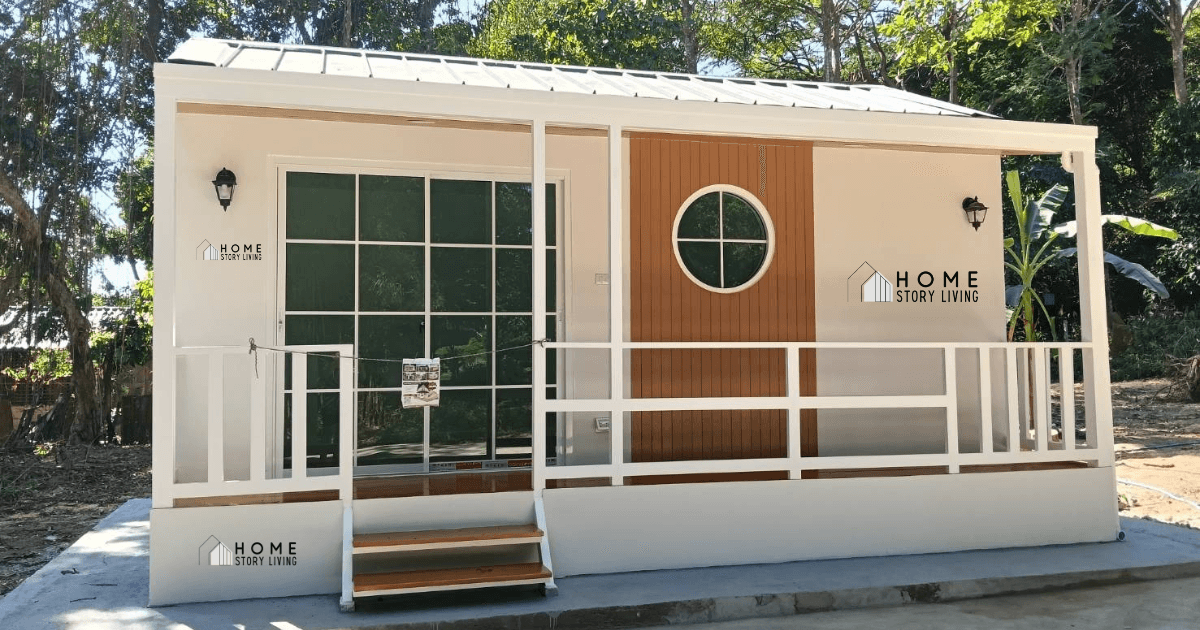
| Minimal 06 | 18 sq m, 1 bedroom, 1 bathroom | THB 199,000 |
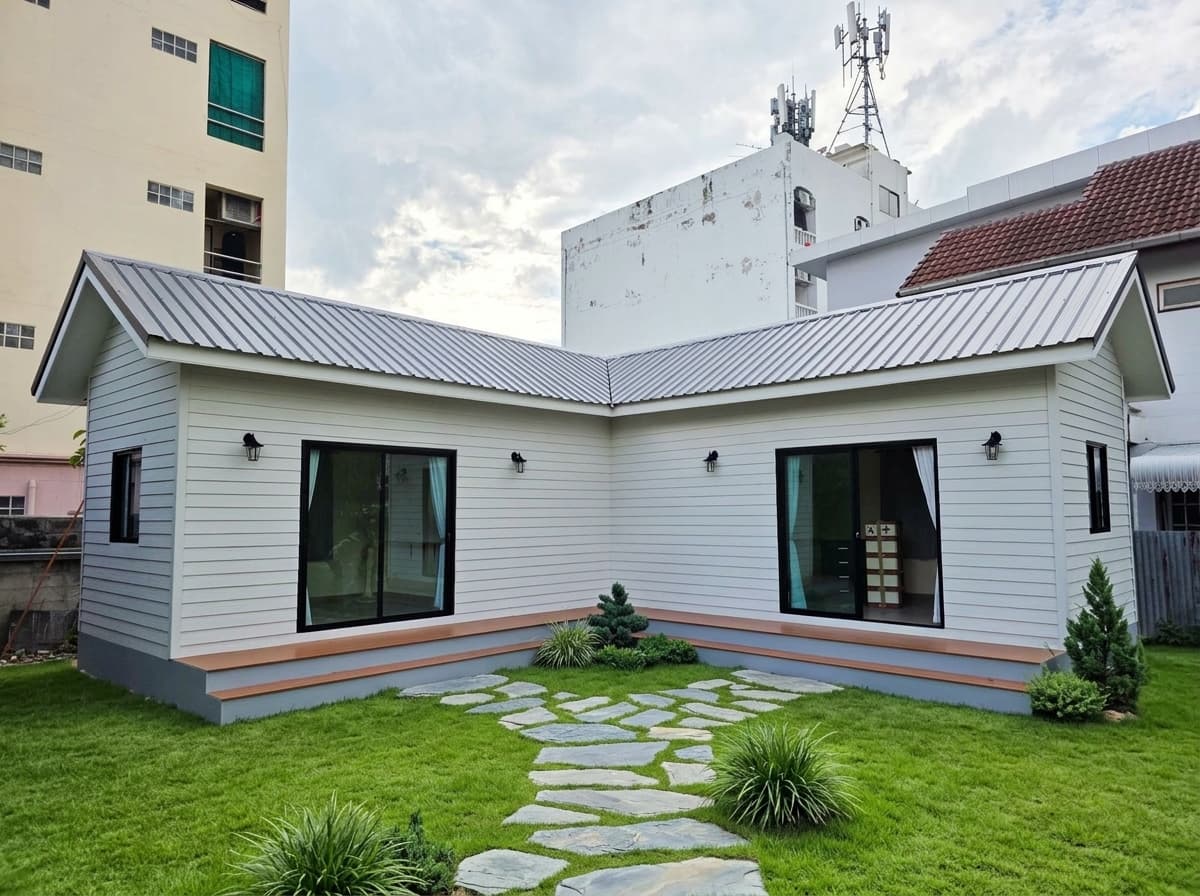
| Modern L 02 | 33 sq m, 2 bedrooms, 1 bathroom | THB 439,000 |
| Japanese 02 | 36 sq m, 2 bedrooms, 1 bathroom | THB 499,000 |
A starting price is not the total installed project cost. Published model conditions indicate that foundations, plumbing and sanitation, external electrical work, land filling and levelling, fencing and gates, transport, and 7% VAT may be priced separately. Ask for every inclusion and exclusion in writing. See also the THB 500,000–1,000,000 prefab-home budget guide.
Six advantages of a modular house
- A more predictable programme: factory production and selected site preparation can run in parallel.
- Repeatable quality checks: structure, wall layers, and services can be inspected at fixed workstations.
- Less time and disturbance on site: installation generally creates less prolonged noise, dust, and neighbourhood disruption than a fully site-built process.
- Easier comparison: standard models make areas, specifications, options, and starting prices more visible.
- Useful for accessible projects away from the factory: including compact residences, holiday homes, and houses for parents.
- Potential for planned expansion: only when the structure, connections, and services are designed for it from the beginning.
Six limitations to understand before buying
- The transport route controls feasibility. Road width, corners, bridges, overhead cables, gates, and crane position can limit module size and increase cost.
- A suitable foundation is still required. Modular does not mean placing a home on unprepared ground.
- Late changes can be expensive. Moving windows, service points, or room layouts after factory production begins affects materials and timing.
- A low price says little about the complete specification. Compare steel, corrosion protection, wall build-up, insulation, waterproofing, roof, windows, and services.
- Module joints need careful detailing. Multi-module homes require sound structural, waterproofing, roof-drainage, and movement-joint solutions.
- Durability depends on the whole system. Design, materials, workmanship, environment, and maintenance matter more than the label “modular.”
What do real projects show?
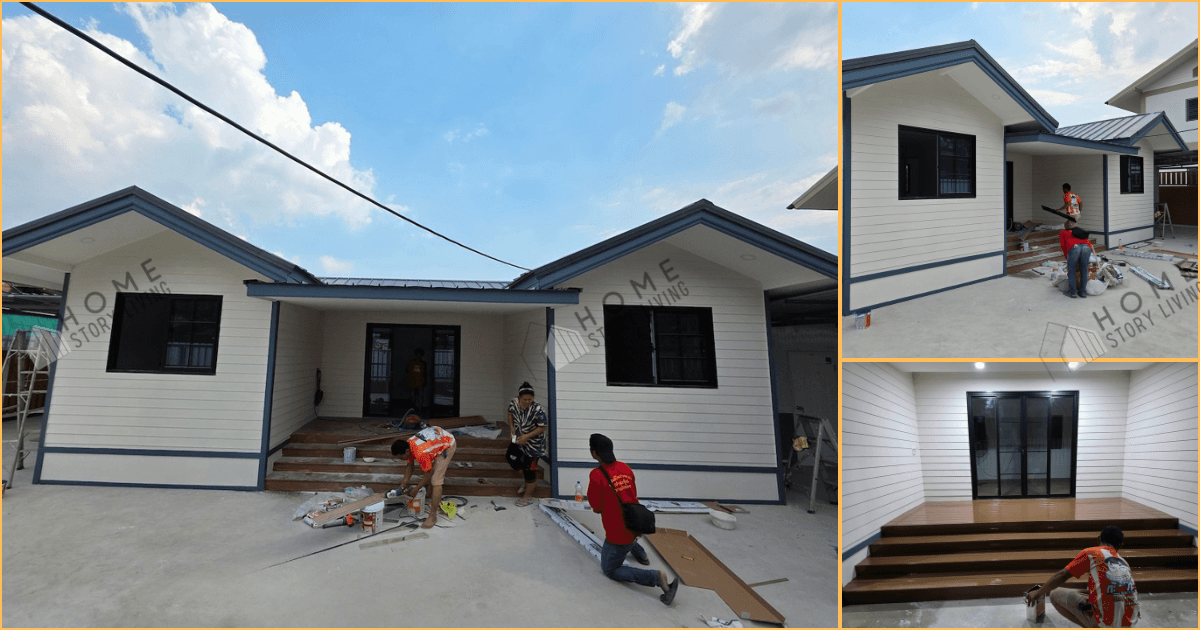
The 18 sq m Japanese-style modular house in Chiang Mai demonstrates why roads, slopes, foundations, transport, and installation must be planned together. Amah’s House in Rama 2, about 46 sq m with two bedrooms and two bathrooms, shows how an extension can work when structural planning and site execution are coordinated. Both cases show that modular construction is an integrated factory-and-site process, not simply a room delivered to a plot.
Ten checks before signing
- Verify the company, factory, and accountable project team.
- Request structural drawings and a model-specific material specification.
- Confirm the percentage completed in the factory and the exact site scope.
- List foundations, transport, lifting, utilities, and taxes separately.
- Survey the land and transport route before committing.
- State who prepares, signs, and submits permit documents.
- Request factory and site quality-control checklists.
- Link payment stages to verifiable work milestones.
- Confirm warranty coverage for structure, leaks, openings, and services.
- Inspect completed projects, not only rendered images.
Use this together with the land checklist and the 12-point factory-selection checklist.
Frequently asked questions
Does a modular house need a building permit in Thailand?
A home intended as a fixed residence and connected to foundations and utilities should normally be checked with the responsible local authority before work begins. Requirements vary by land, building, and area. Read why prefab homes may require permits and confirm the project with the local authority.
How long does a modular house last?
There is no single number that applies to every product. Service life depends on structural design, steel and corrosion protection, wall and roof systems, waterproofing, installation quality, exposure, and maintenance. Ask for verifiable specifications and written warranty terms rather than accepting an unsupported lifespan claim.
Are modular houses hot or noisy in rain?
Performance depends on the roof build-up, insulation, ventilation, wall layers, windows, and installation details. Compare the full roof and wall assembly—not only brand names.
Conclusion: a strong option when speed and process control matter
A modular house can be a good choice when the land and transport route are suitable and the owner values a shorter site period, visible specifications, and a controlled production process. Compare the total project cost, structural and material system, factory quality control, site responsibilities, and after-sales service rather than the lowest advertised price.
Next step: send Home Story Living your land location, required rooms, budget, and target move-in date for an initial review of model suitability, transport, foundations, and project scope.
Disclaimer: This article provides general planning information. Prices and specifications can change. Permit, structural, and site requirements must be confirmed for the individual project by relevant professionals and local authorities.
 Chat on LINE