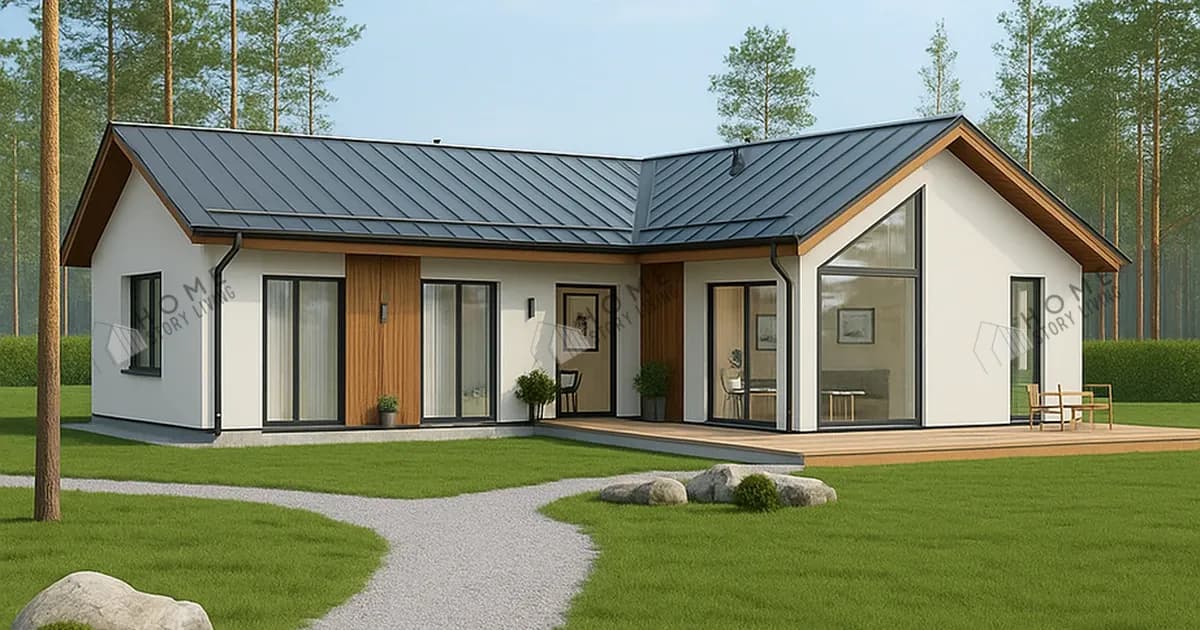
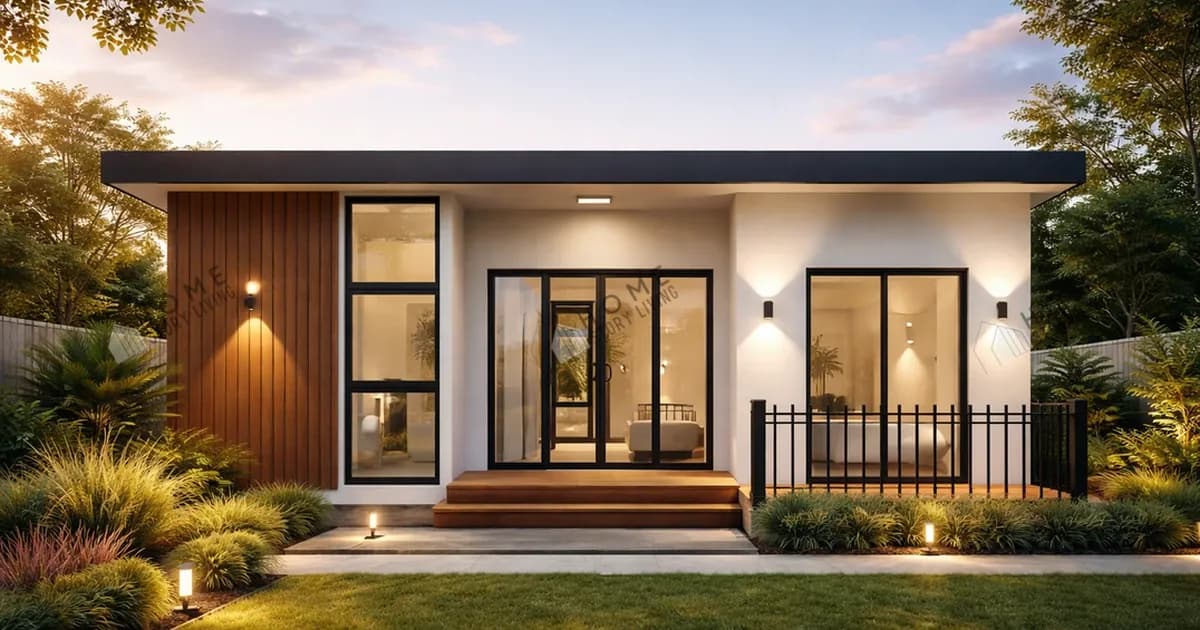
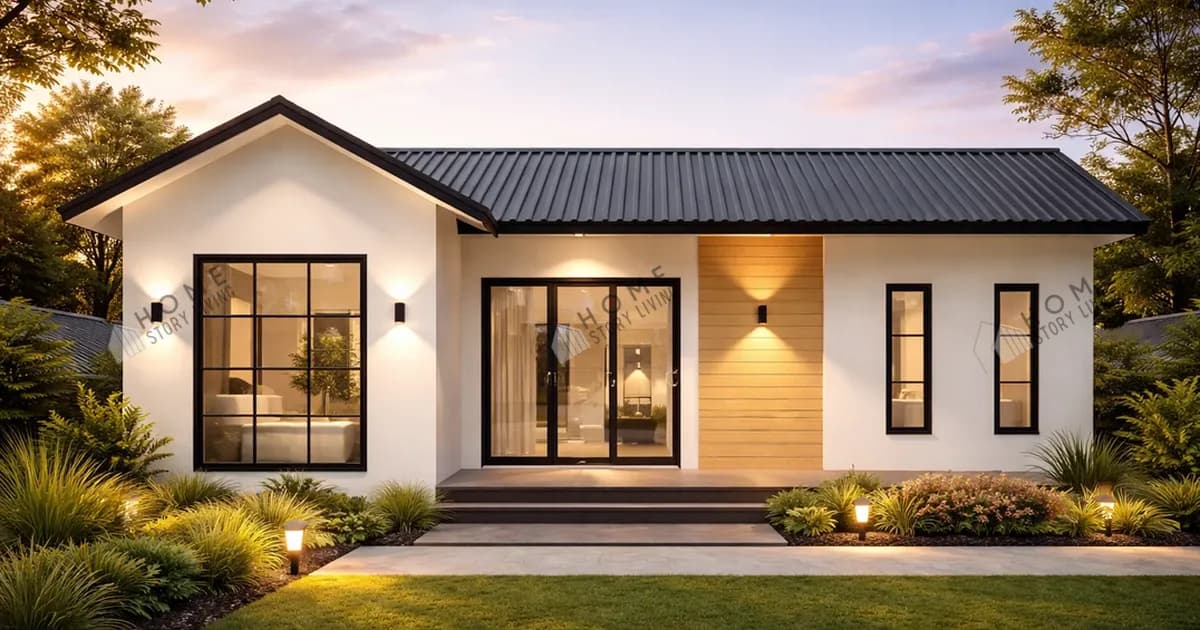
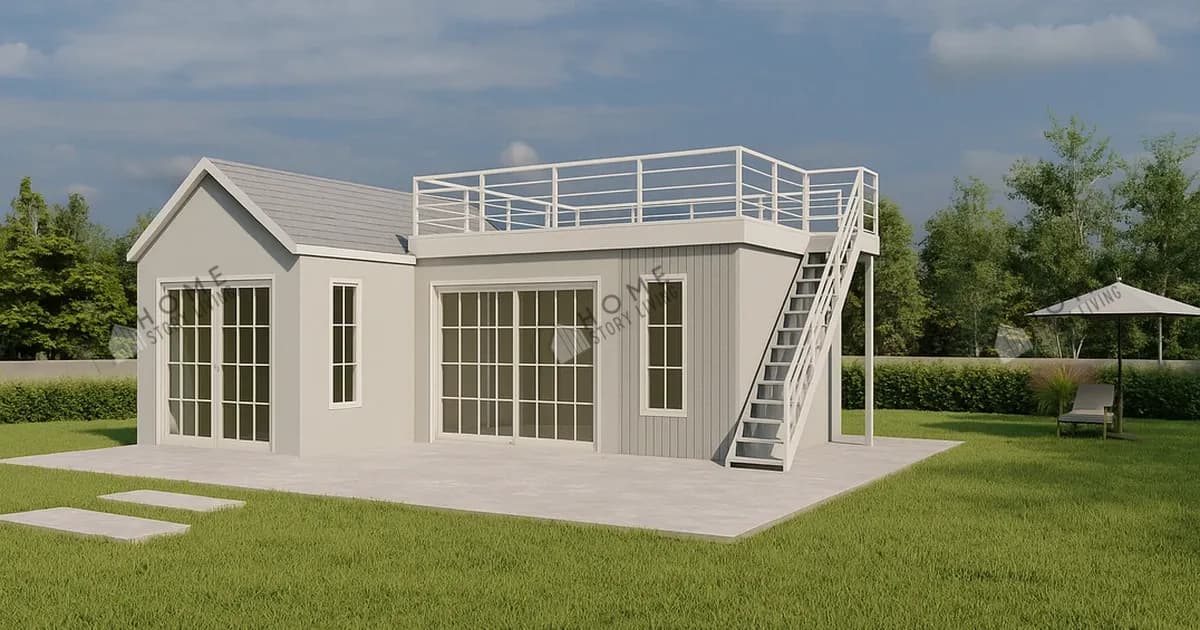
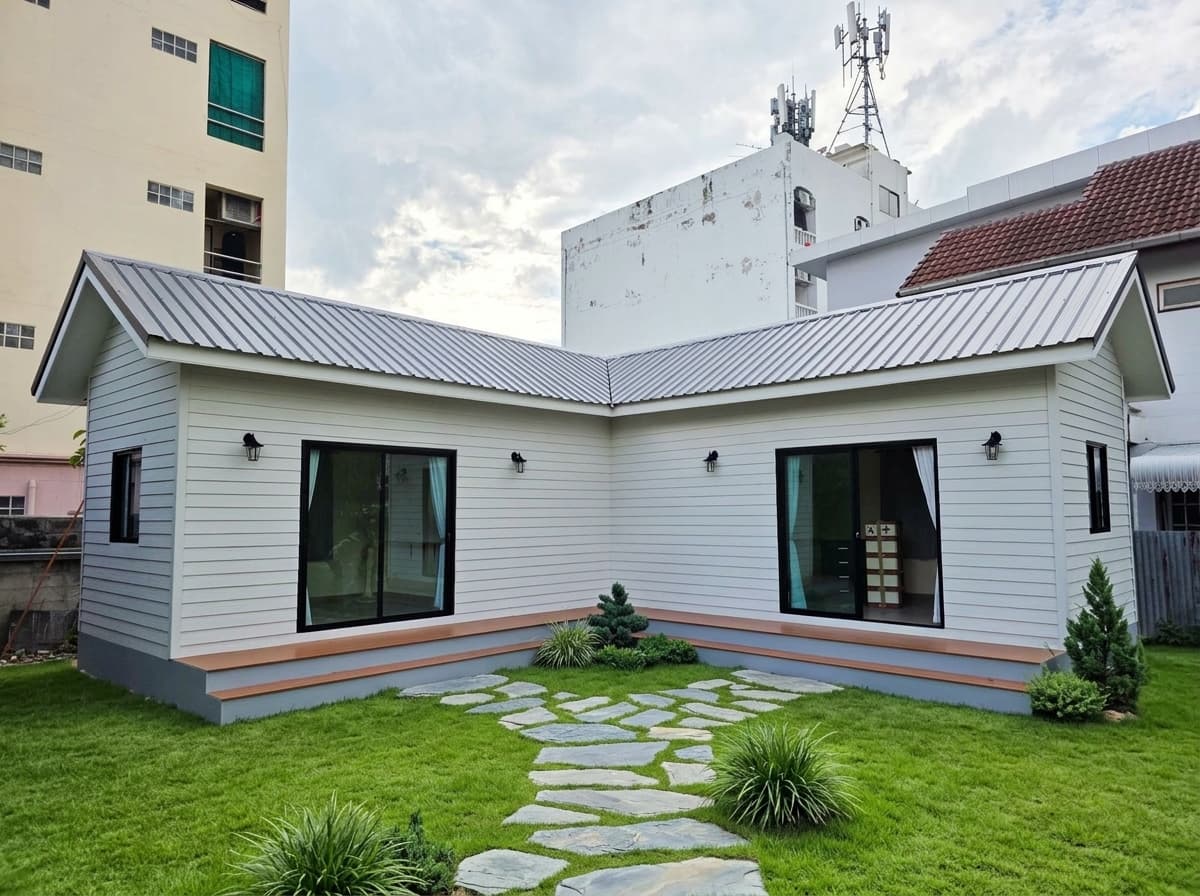
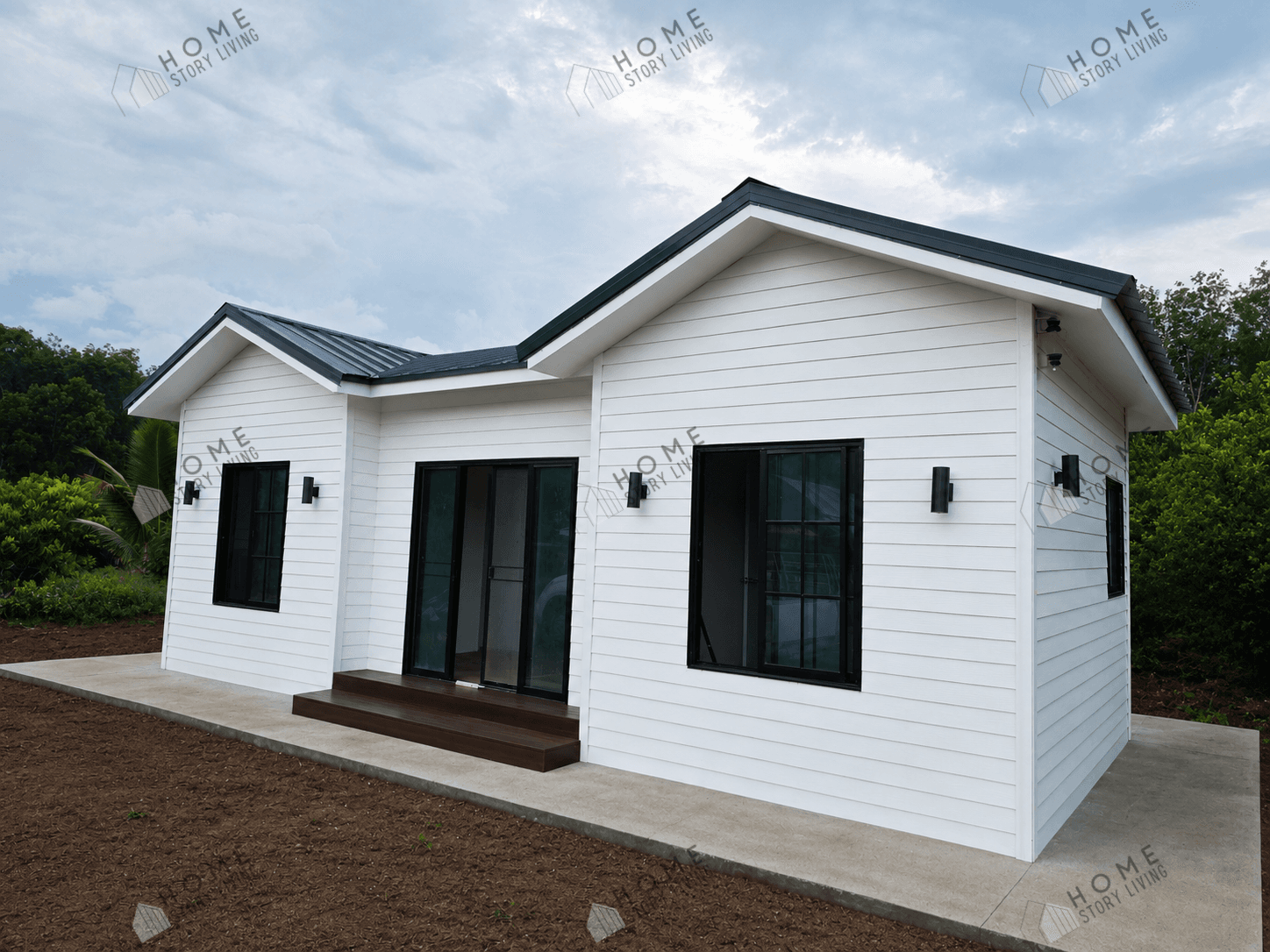
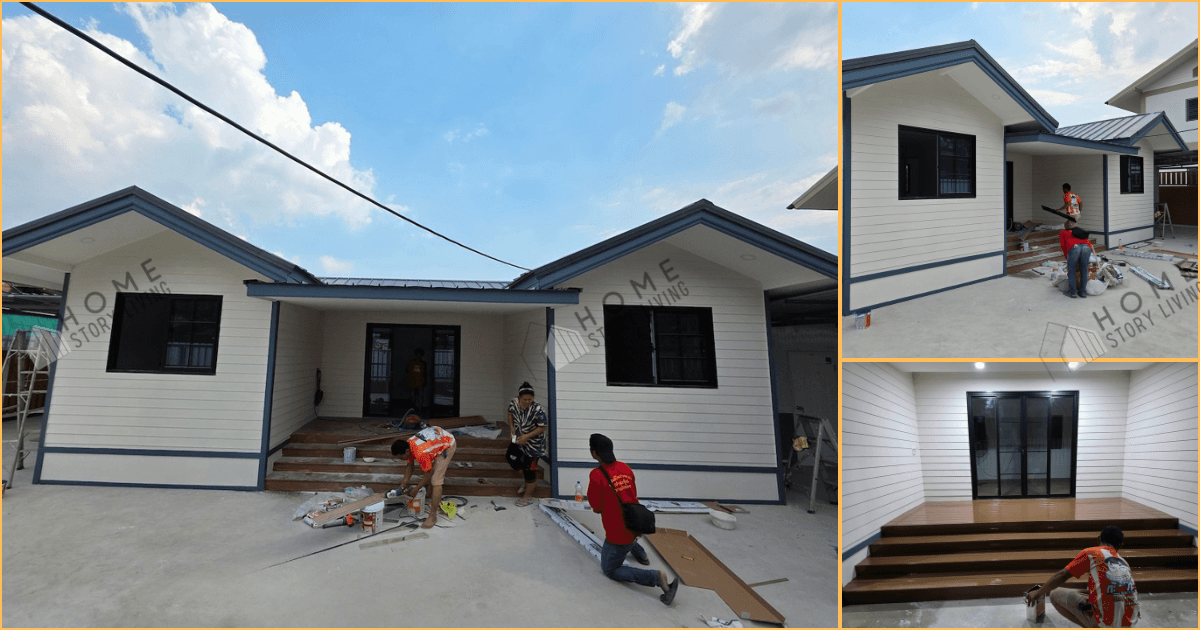
2026 Financing Summary: Yes—you can get a Thai bank construction mortgage for a prefabricated or knockdown house (via GHB, GSB, and major commercial banks) provided the home qualifies as permanent real estate. The structure must be permanently bolted onto engineered reinforced concrete foundations on an unencumbered Chanote land title deed owned by a Thai national (such as yourself or a Thai spouse), backed by an official Or.1 Building Permit, engineer-certified blueprints, and an itemized BOQ. Because Thai banks disburse construction loans only after modules are anchored on-site, homeowners either bridge the initial factory production deposit or use a lump-sum Home Equity Loan (Home for Cash). Foreign buyers typically build on 30-year leasehold land with registered Superficies using transparent factory milestone payments.
📌 Key Takeaways for Financing a Prefab or Modular Home in Thailand:
- Movable Cabin vs. Permanent Real Estate: Temporary cabins placed loosely on concrete blocks cannot get a home mortgage. Permanent TISI galvanized steel homes anchored to concrete footing piers by Home Story Living qualify as immovable real property.
- Thai Nationals & Thai Spouse Mortgages: Thai citizens (including Thai spouses of foreign expats) can apply for low-interest home construction loans using their Chanote land deed, Or.1 permit, and structural BOQ.
- Factory Production vs. Bank Inspection Gap: Banks only release loan tranches once the structure sits on the mortgaged land plot—meaning buyers need bridge cash during the 45–60 day off-site factory build, or can use a Home Equity lump-sum loan instead.
- Expat & Investor Route: Foreign nationals cannot directly mortgage Thai land, so expat retirees and resort investors use stage-based construction milestone payments alongside registered 30-year leases and Superficies building ownership.
1. Why Typical Knockdown Cabins Get Rejected While Engineered Modular Homes Qualify
Many landowners hear rumors that Thai banks refuse mortgages for knockdown houses. In reality, bank appraisers reject movable structures—lightweight cabins placed on bare ground without foundation piers or building permits. Under Section 144 of the Thai Civil and Commercial Code, a structure must be permanently affixed to land to become a legal component of immovable property.
Every Home Story Living prefabricated home is engineered with TISI-certified galvanized structural steel (30–50 year lifespan), SCG Double Wall panels insulated with 2-inch foil-wrapped roll insulation (C-CO Rt-21 / Microfiber / SCG), and 1-to-1 steel base plates anchored into reinforced concrete piers—meeting full bank collateral standards:
2. Thai Nationals, Mixed Couples & Expat Buyers: How Ownership & Financing Work
- Thai Landowners & Thai Spouses of Expats: If the Chanote title deed (Nor.Sor.4 Jor) is held in a Thai citizen’s name with public road access, the Thai owner can apply for a Home Construction Loan at Government Housing Bank (GHB), Government Savings Bank (GSB), or commercial banks (SCB, KBank, Bangkok Bank, Krungsri). Check your plot readiness first with our 9-Point Land Preparation Checklist.
- Foreign Expats & Retirement Villas: Under Thai law, foreign individuals cannot own freehold land directly, though they can legally own the house structure itself by registering a Right of Superficies or 30-Year Leasehold at the Land Office alongside an Or.1 permit in the foreigner’s name. Because Thai retail banks rarely lend to non-residents without Thai collateral, expat buyers utilize Home Story Living’s structured construction milestone payments over the 30–75 day build cycle.
- Thai Registered Companies (B2B Resorts & Staff Housing): Operating Thai companies building hospitality villas, cafes, or staff quarters can finance projects via SME commercial credit lines or stage-payment cash flow.
3. Navigating the Factory-vs-Bank Cash Flow Gap: 3 Practical Payment Routes
Unlike traditional concrete builders who pour columns brick-by-brick on your land over 8 months, prefab manufacturers build 80–90% of your home inside a quality-controlled factory before craning it onto your concrete piers. However, Thai construction mortgages only disburse funds based on completed work physically attached to the land plot—banks will not release tranches while steel modules are still on the factory floor.
Here are the 3 proven financing strategies used by our homeowners:
4. Proven Real-World Installations on Permanent Foundations
Explore how Home Story Living delivers code-compliant permanent residences across Thailand:
- Parents' House in Chawang, Nakhon Si Thammarat: Elevated reinforced concrete pier foundation with permanent utilities.
- Baan Ama Modern Thai Modular Home, Rama 2: Multi-module steel family residence engineered for long-term stability.
- 3-Module Staff Residence in Sutthisan, Bangkok: Urban Bangkok project built to strict municipal setback and structural codes.
Design your floor plan and estimate your budget instantly with the Home Story Prime 3D Configurator or consult our engineering team.
Frequently Asked Questions About Prefab House Bank Loans in Thailand (FAQ)
Can Thai banks really approve a home loan for a knockdown or prefab house?
Yes. GHB, GSB, and major Thai commercial banks approve construction mortgages for prefabricated and modular houses when they are permanently anchored to reinforced concrete foundations on a Chanote title deed, built with durable 30–50 year structural materials, and supported by an Or.1 building permit and engineer-certified BOQ.
Can a foreign husband and Thai wife get a bank loan to build a prefab house?
Yes, if the land title deed is in the Thai spouse’s name and the Thai spouse qualifies based on verifiable Thai income. Some Thai banks also consider the foreign spouse’s documented income (with a valid Thai work permit) as a co-guarantor, though policies vary by bank.
Why won't the bank pay the first loan installment while the house is being built in the factory?
Thai mortgage regulations require collateral to be physically attached to the mortgaged land plot before funds are released. Modules inside an off-site factory are not yet legally attached to your land, which is why buyers either use short-term bridge funds until installation day or choose a Home Equity lump-sum loan.
How much of the prefab construction cost will a Thai bank finance?
Banks typically lend 80% to 100% of the bank appraiser’s valuation or the construction contract price, whichever is lower. Keeping a 15–20% cash reserve ensures smooth coverage of foundation work, transport, and valuation differences.
Does Home Story Living offer direct monthly installment financing?
We do not provide multi-year in-house credit financing, but every project uses transparent stage-by-stage construction milestone payments tied to real factory and on-site progress, and we supply engineering blueprints and quotations to support your bank loan application.
Are foundation piers, crane delivery, and permit fees included in the base house price?
Website model prices cover the complete factory-built house with internal electrical, plumbing, and bathroom fixtures. Concrete foundations (tailored to soil conditions), crane transport, local permit fees, and bank mortgage registration fees are quoted transparently based on your exact site location.
📌 Explore Home Story Living’s 38 Models & Engineering Guides:
- Prefabricated Houses Thailand — Compare all 38 TISI galvanized steel models & prices
- Knockdown Houses — 30–50 year permanent engineering vs standard cabins
- Modular Houses & Narrow-Alley Assembly — Custom 3D layouts & on-site assembly
- 2-Bedroom Family Prefab House Guide — Top models for permanent family mortgages
 Chat on LINE